Out of Stock, Out of Luck: The Hidden Bottlenecks Breaking the Cannabis Supply Chain
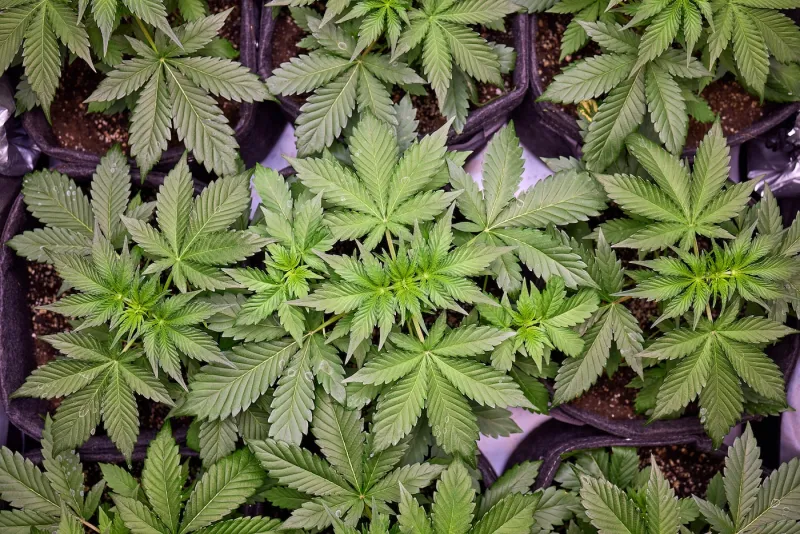
Photo: cannabis dispensary empty shelves supply chain logistics warehouse, via humboldtseedcompany.com
You've been there. You pull up to your regular dispensary, ready to grab that specific strain or that one tincture that's become part of your routine — and it's gone. Not just sold out for the day, but gone gone. The budtender tells you it's been weeks since they've seen it on the shelf. Maybe it's coming back. Maybe it isn't.
This isn't a fluke. Across the country, legal cannabis consumers and the businesses that serve them are running headlong into a supply chain crisis that the industry has been quietly papering over for years. The cracks are getting harder to ignore.
The Patchwork Problem Nobody Wants to Talk About
Here's the foundational issue: cannabis is still federally illegal. That one fact cascades into a thousand logistical nightmares. Unlike virtually any other consumer goods sector in America, cannabis companies cannot move product across state lines — period. A cultivation facility in Colorado cannot ship flower to a dispensary in Illinois, even though both states have fully legal adult-use markets. Every state operates as its own isolated ecosystem, which means brands have to essentially rebuild their supply chain from scratch in every single market they enter.
"We're not dealing with one supply chain — we're dealing with thirty-something parallel supply chains that don't talk to each other," said one multistate operator's director of logistics, who asked to remain anonymous because of ongoing licensing negotiations. "The inefficiency is baked into the legal framework itself."
The result? Regional supply shocks that have no relief valve. When a cultivation facility in Michigan faces a crop loss due to mold or pest pressure, there's no neighboring state that can absorb the shortfall. Dispensary shelves go bare. Consumers go elsewhere — or go without.
Cultivation Constraints Are Compounding the Crisis
Growing cannabis at commercial scale is genuinely hard. It requires significant capital, specialized infrastructure, and a skilled workforce that the industry is still struggling to develop. Many licensed cultivators — especially smaller operators — are running facilities that were designed for a market that looked very different three or four years ago.
Demand has shifted fast. Consumers have moved aggressively toward concentrates, live resin, and high-potency vape products, while traditional flower continues to face pricing pressure. Cultivators who built out their operations to serve one product category are now trying to pivot mid-stream, and those transitions take time and money that not everyone has.
Meanwhile, state licensing backlogs continue to slow the entry of new cultivation capacity into many markets. In states like New York and New Jersey, where adult-use programs launched with enormous fanfare, the licensed supply still hasn't caught up to actual consumer demand. The gap between the market that exists on paper and the market that exists on the ground remains wide.
Distribution: The Forgotten Middle of the Chain
If cultivation is the crisis everyone talks about, distribution is the crisis nobody does. In most states, cannabis distributors operate under licensing structures that were designed with caution rather than efficiency in mind. Delivery windows are restricted. Vehicles must meet specific requirements. Driver certifications add another layer of compliance overhead.
For brands trying to scale, distribution relationships are often the single biggest operational headache. Many dispensaries, particularly in metro markets, are served by only a handful of licensed distributors — which means brands have limited options and limited leverage when it comes to delivery frequency, shelf positioning, and promotional support.
"You've got a great product, you've got consumer demand, and you literally cannot get it to the store fast enough because the distribution network isn't built for the volume we're doing now," said one California-based brand founder who has been operating in the state's legal market since 2018. "It's like trying to run a modern e-commerce operation through a system designed for a farmers market."
What Forward-Thinking Operators Are Actually Doing
The good news — and there is some — is that the most sophisticated players in the industry are not sitting around waiting for federal reform to fix their problems. A growing number of multistate operators and well-capitalized brands are investing heavily in vertical integration, bringing cultivation, processing, and distribution under one roof wherever state regulations allow.
Technology is playing a bigger role too. Seed-to-sale tracking software, which states require for compliance purposes, is being repurposed as a genuine supply chain intelligence tool. Operators who know how to read their own data can anticipate demand fluctuations, optimize harvest schedules, and reduce the kind of feast-or-famine inventory cycles that drive consumers crazy.
Some companies are also getting creative with their state-by-state strategies — rather than trying to replicate their full product lineup in every market, they're launching with a curated selection that their supply chain can actually support consistently. It's a more modest approach, but it's one that keeps shelves stocked.
The Consumer Cost
Lost in most industry discussions about supply chain efficiency is the human side of the equation. For medical patients, inconsistent product availability isn't just an inconvenience — it's a genuine health concern. When someone relies on a specific formulation to manage chronic pain, anxiety, or sleep disorders, having that product disappear without warning can send them back to unregulated sources or push them toward pharmaceutical alternatives.
Even for recreational consumers, repeated stockouts erode brand loyalty and, more importantly, erode trust in the legal market itself. Every time a customer can't find what they're looking for at a licensed dispensary, the illicit market gets a little more attractive by comparison.
That's a problem the industry cannot afford to ignore. The legal cannabis market has spent years trying to convince consumers to make the switch from gray and black market sources. Supply chain failures undercut that pitch in real time.
The Long Game
Federal rescheduling or legalization would obviously change the calculus dramatically — interstate commerce would unlock distribution networks that could actually function at scale. But nobody in the industry is holding their breath on a timeline for that.
In the meantime, the operators who figure out how to build resilient, responsive supply chains within the current regulatory framework are the ones who are going to own this market long-term. The brands that keep showing up on shelves — consistently, reliably, week after week — are the ones consumers will actually remember.
In an industry full of bold claims and big promises, consistent availability might be the most underrated competitive advantage of all.